
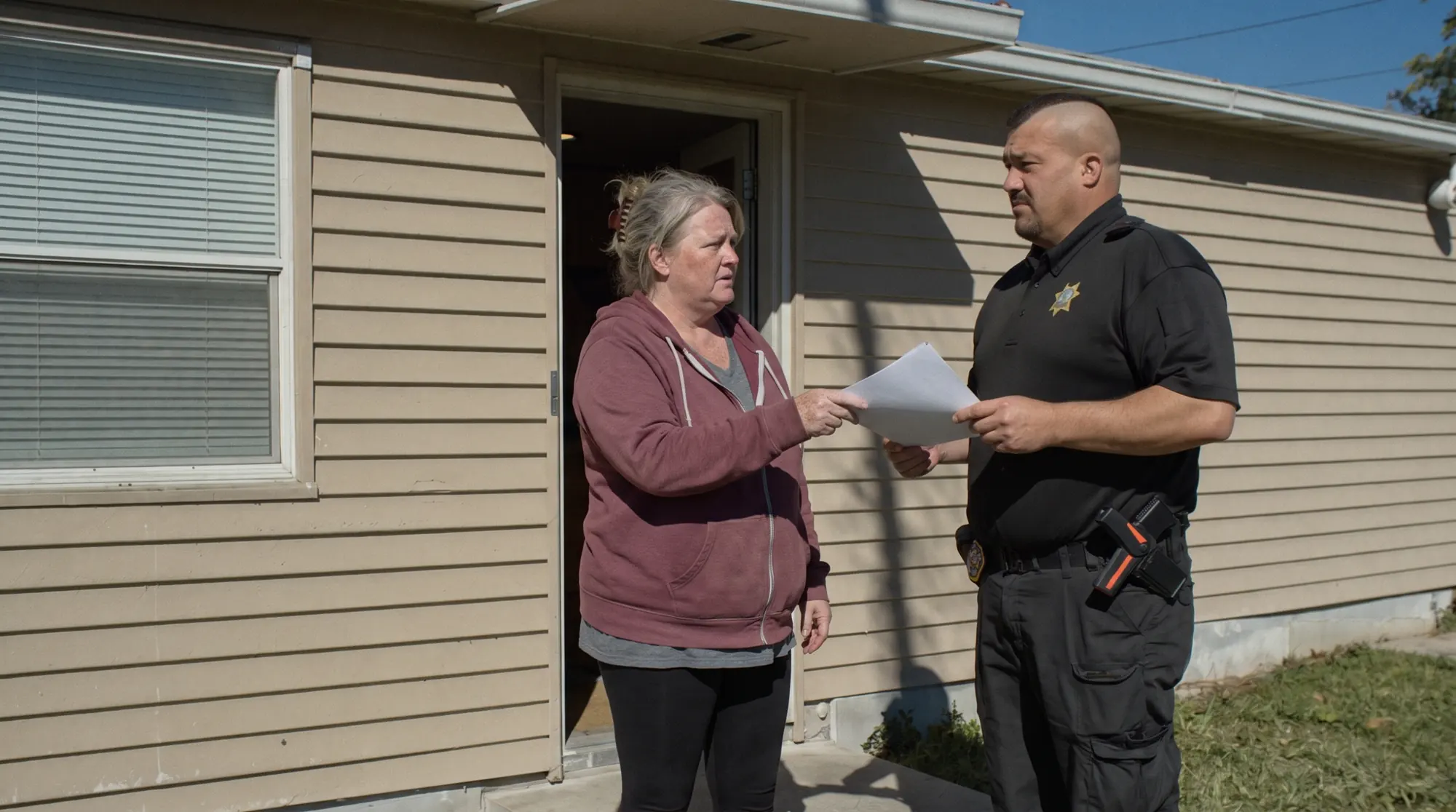
What papers did we deliver to you?
Someone filed court papers that must be delivered to you. The person or company named at the top of the papers started the case, and Wasatch Constables was hired to deliver them. We did not decide to sue you, and we don’t take sides. The papers we deliver most often:
- Summons and complaint: someone is suing you in a civil case
- Small claims: a smaller civil case in justice court
- Eviction notice or eviction summons: a landlord is asking to end a tenancy
- Protective order or stalking injunction: a court order with a hearing date
- Subpoena: you are asked to testify or to produce records
- Divorce, custody or support papers
- Writ of garnishment or writ of execution: steps to collect a judgment
Who filed? We only point you to what is printed on the papers. The caption at the top names who filed, and the papers usually list their lawyer or contact information. To learn more about our role, read what a constable is in Utah.

What happens next?
Every case has a deadline, and missing it can mean you lose without being heard. Here is what the Utah courts say about three common ones:
- Civil case: “In Utah? You have 21 days to respond.” If you were served outside Utah, you have 30 days (Utah Courts).
- Eviction: “You only have 3 business days to respond after you receive these court papers” (Utah Courts).
- Protective order: a hearing is usually set within 21 days, and if you don’t go, the judge can decide without hearing from you (Utah Courts).
The date printed on your papers controls. If it differs from anything here, follow the papers. Look up your case for free in MyCase. The Utah Courts Self-Help Center helps people without a lawyer for free: call 888-683-0009, text 801-742-1898, or email selfhelp@utcourts.gov, Monday through Friday, 11 a.m. to 5 p.m.

Is this real? How to check
You can check that the papers and the constable are real without taking anyone’s word for it, ours included.
- Check the case. Look up the case number from your papers in MyCase, or call the court named on them.
- Call us at a number you find yourself. Our number is 801-392-9400, as listed on this site and on Google. Don’t trust a number from a voicemail or a text.
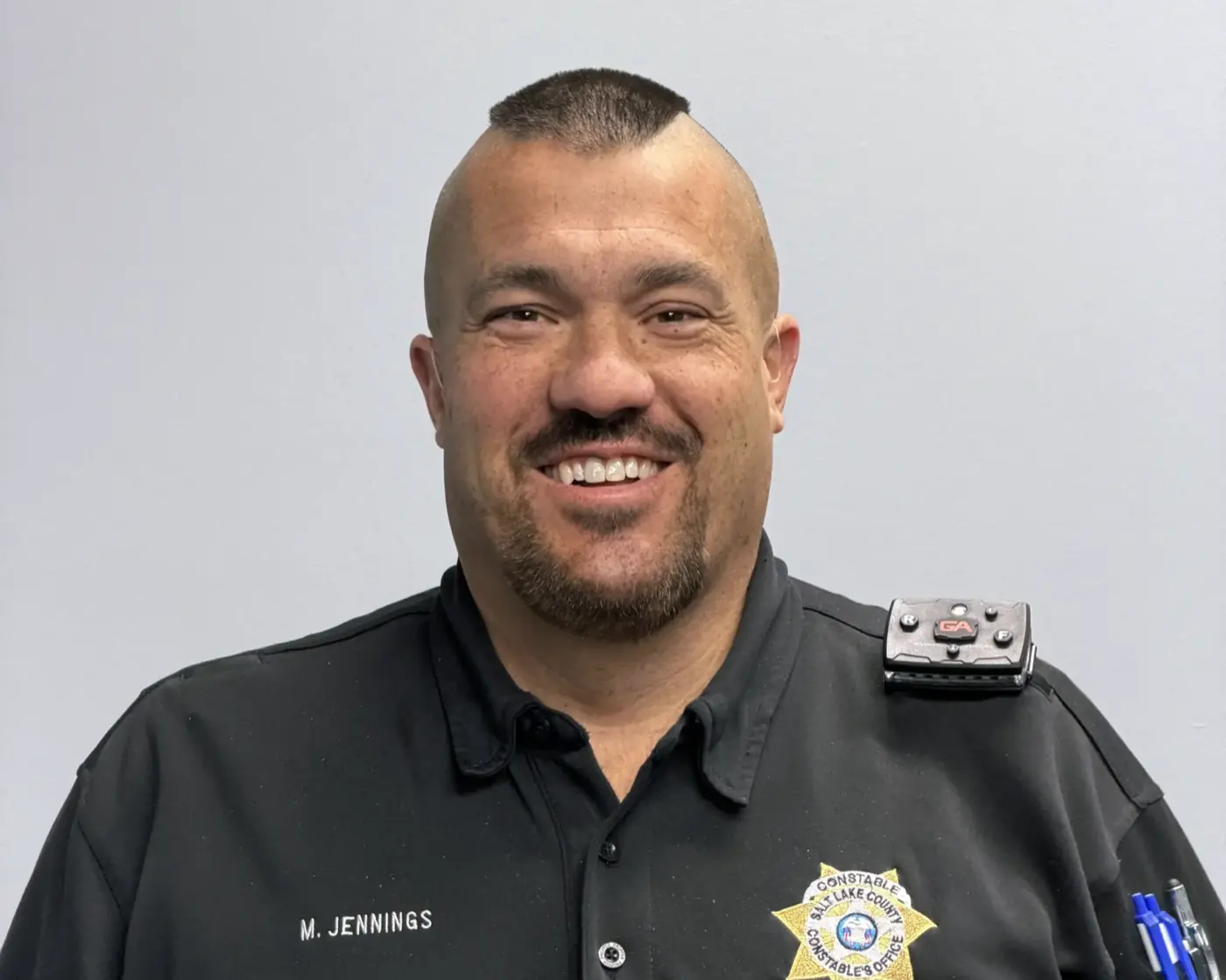
- Check the appointment. Constable Matt Jennings was approved by the Salt Lake County Council on June 10, 2025 (council record) and appointed South Ogden City Constable on October 7, 2025 (city record). See who we are.
- Check the license. Utah’s Division of Professional Licensing (DOPL) began regulating constables in May 2026, and licenses are required starting January 1, 2027. DOPL’s constable page links to its Verify a License tool.

How we do and don’t contact you
Sometimes we call. When we do, it’s to ask to meet you in person so we can hand you the papers. For your privacy, we never tell anyone what the papers are about over the phone. We disclose papers only to someone who can lawfully accept service.
We will never:
- threaten you with arrest on the phone
- ask you to pay over the phone to “stop” a case
- ask for gift cards, cryptocurrency, payment apps or wire transfers
When a payment is owed to us, for example on a writ of execution, we accept only certified funds or the payment pages on this website. If a caller says they are a constable or process server and asks for money or personal details, hang up. The FTC’s advice is simple: “Hang up. Don’t call the number back” (FTC). Then call us or the court yourself.

The papers weren’t for me, or were left with my family
Papers can be served by leaving them with an adult who lives at the home. Utah’s court rules allow leaving them with “a person of suitable age and discretion who resides there” (Utah Rule of Civil Procedure 4). If the papers name someone else, or the address is wrong:
- If the mistake is ours, such as a wrong date, time or description on the return of service, call us at 801-392-9400. We check it against the deputy’s GPS-stamped attempt record.
- If the mistake came from the information we were given, such as the wrong name or address, contact the person or lawyer who filed the case. Their contact information is on the papers.
- Either way, tell the court. The clerk for the case can tell you how to raise it.
Do you work for the person suing me?
We are hired by the person who filed the case. When we serve papers, we act as an officer of the court: our job is to deliver the papers correctly and report truthfully to the court how and when we did it. We don’t represent either side, and we can’t give legal advice to anyone.
- We can tell you that we served papers, and when, where and how we served them.
- We can’t tell you what the papers mean for you, whether to respond or what to file, or anything about the case over the phone.

Where can I get free legal help?
If you need advice about your case, these are free or low-cost places to start:
- Utah Courts Self-Help Center: 888-683-0009, text 801-742-1898, selfhelp@utcourts.gov.
- Utah Legal Services, for people with low incomes: (801) 328-8891.
- Free legal clinics listed by the Utah courts, including landlord-tenant and debt-collection help.

Questions about how you were served?
We’ll tell you what we did and when. For questions about your case, the court and the Self-Help Center can help.
FAQs
Questions after being served
Can I refuse to be served?
Refusing to take the papers doesn’t stop the case. Under Utah’s court rules, if you refuse, service still counts when the person serving you names the papers and offers them to you. The case then moves forward with or without you, so read the papers and note the deadline.
How many times will a constable try to serve me?
It depends on the service level the person who filed chose. Our Standard level makes up to 4 attempts within 30 days. Our Guaranteed level makes up to 99 attempts over 180 days. Avoiding service usually just means more attempts.
Can a constable arrest me?
Only on a warrant, and only while working for the city or county that hired them (Utah Code 58-91-301). A constable delivering civil papers is there to hand them to you, not to arrest you over a debt. Ignoring a court order, such as an order to appear, is what can lead a judge to issue a warrant.
Someone called saying they’re a process server. Is it a scam?
It might be. We sometimes call, but only to ask to meet you in person. We never discuss your papers or ask for payment on the phone. Hang up and call us at 801-392-9400, or call the court, using a number you look up yourself.
Why did a constable leave a card on my door?
It usually means a deputy tried to reach you and missed you. If the card says Wasatch Constables, check that the number matches 801-392-9400 before you call, then arrange a time to receive the papers in person.
Do I have to call a constable back?
No law makes you call back, but it is usually easier if you do. Calling lets you arrange a time to meet a deputy and receive the papers instead of waiting for another visit. For your privacy, we don’t discuss what the papers are about over the phone. Not calling does not stop the case.
Will you tell me who is suing me?
We point you to what is printed on the papers. The caption at the top names who filed the case, and the papers usually list their lawyer or contact information.
How do I reach you about how I was served?
Call or text 801-392-9400, weekdays 8:30 a.m. to 5 p.m., email info@wasatchconstables.com, or come by 5525 S 900 E, Suite 110, Murray. We can tell you when, where and how we served the papers.
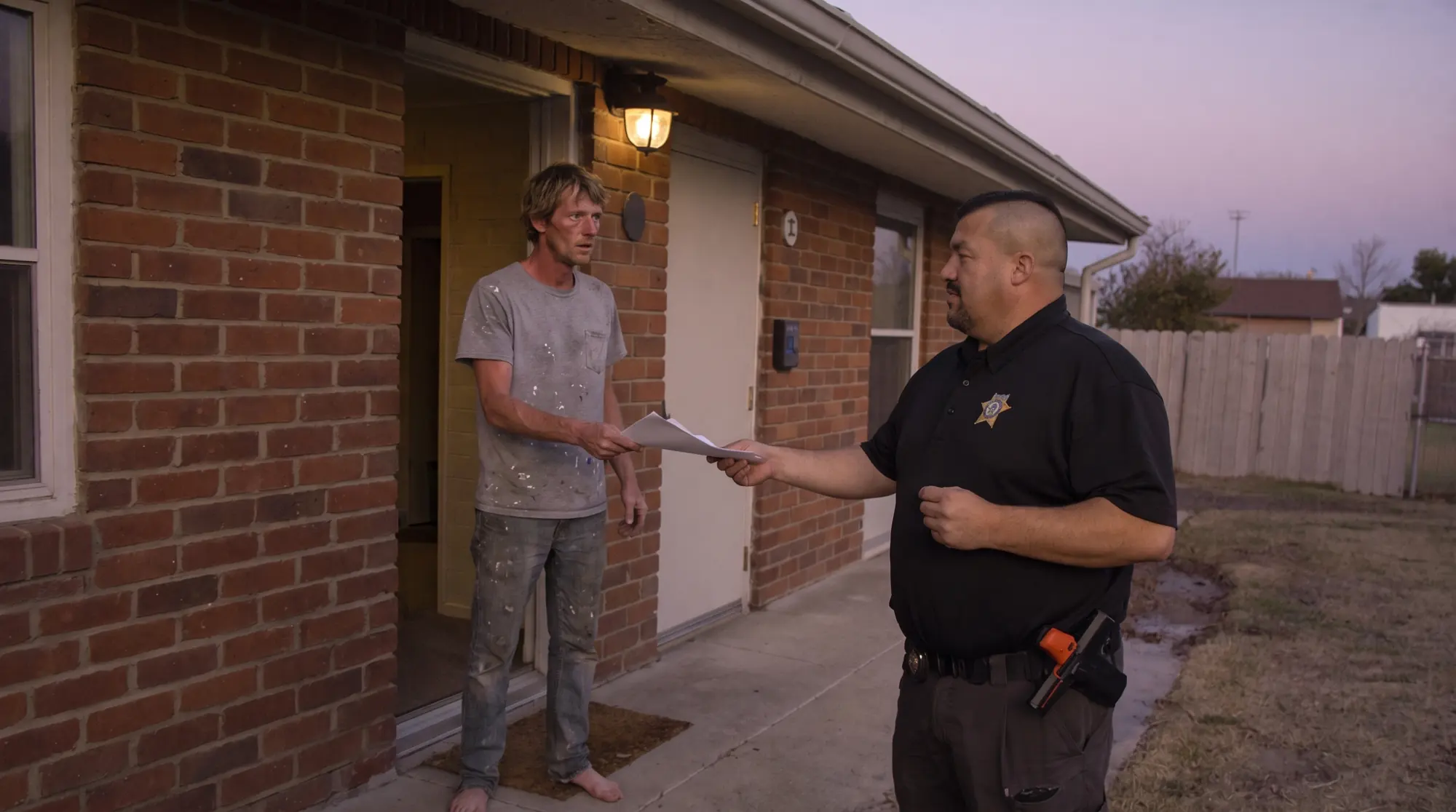
Talk to the office that served you
Call or text 801-392-9400, weekdays 8:30 to 5, email info@wasatchconstables.com, or come by 5525 S 900 E, Suite 110, Murray.
We can’t give legal advice.