

Domesticate your out-of-state subpoena in Utah. We file it and serve it.
71Google Reviews
Send us the subpoena from your state’s court. We file it with the right Utah district court, the clerk issues a Utah subpoena, and a sworn deputy constable serves it. You don’t need a Utah attorney to get it issued.
87,000+ papers resolved since 2010
$129 + $35 court fee · Filed and served · 200% accuracy guarantee
Reviews
Join the clients behind 87,000+ papers resolved since 2010
Google review excerpts from Utah clients.
“Katy confirmed my order right away, and the server completed service quickly and professionally. They sent the affidavit promptly and even filed the Return of Service with the court for me.”

“The complaint and summons were delivered well ahead of time and signed by the right person. I highly recommend this process server company.”

“I used Wasatch Constables for a rush service and had a great experience. Katy was quick to respond to every email and kept me updated throughout the process.”

71 five-star reviews on Google.
How it works
Upload. We file. A deputy serves.
01
Send us the foreign subpoena.
Upload the subpoena with every attachment, the witness’s Utah address and your deadline. Add the name, address and phone number of every attorney of record and any self-represented party. Utah requires them.
02
We file it with the clerk.
We send you the Utah application to sign, then file it with the proposed Utah subpoena in the district where discovery will happen. The clerk opens a case and issues the subpoena.
03
A deputy serves it.
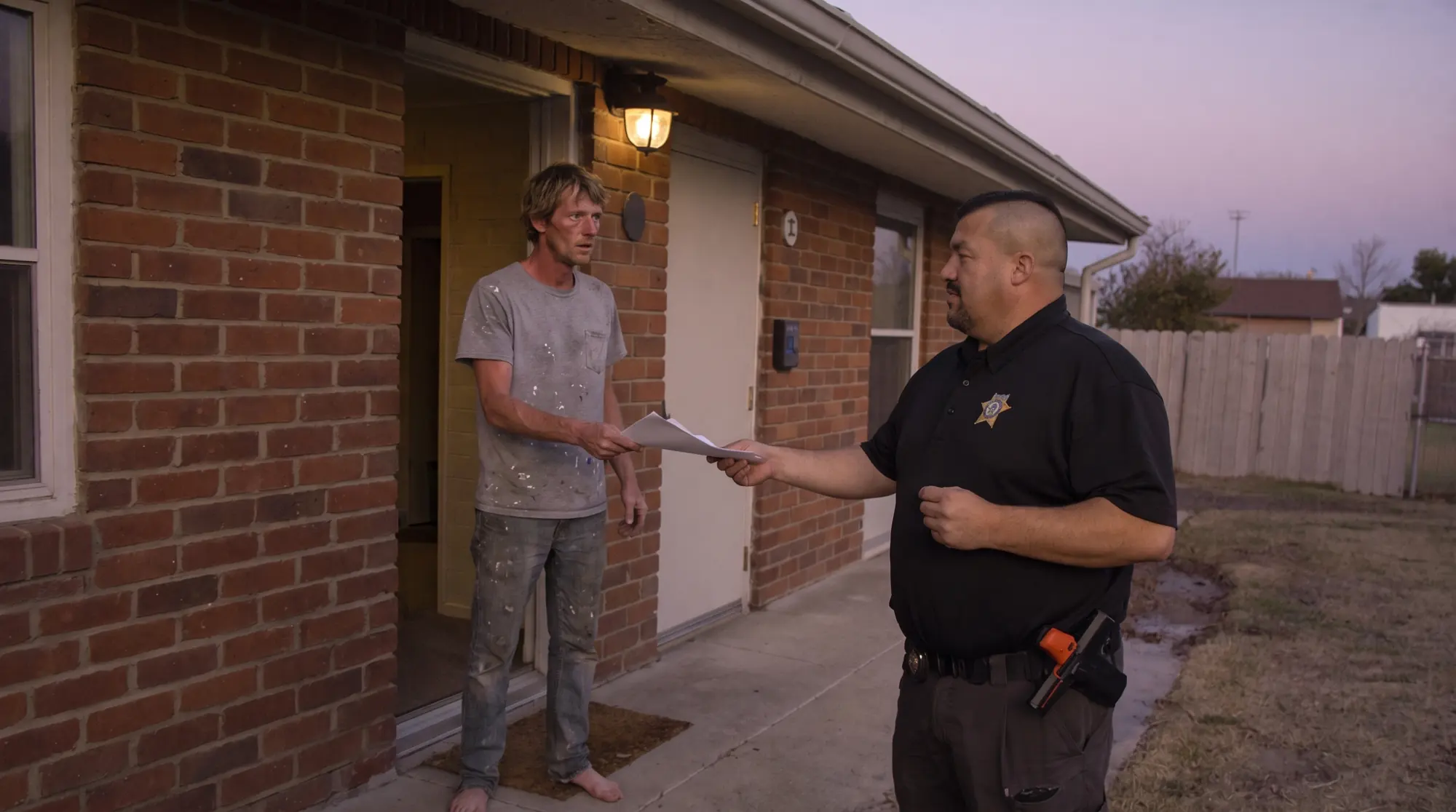
A sworn deputy constable serves the Utah subpoena, with a date, time and GPS record for every attempt. You get the issued subpoena, the Utah case number and the Return of Service by email.
What it costs
One price to file and serve
Domestication is $129, plus the clerk’s $35 filing fee (Utah Code §78A-2-301), for $164 in all. That covers filing the application, getting the Utah subpoena issued, and serving it. If the subpoena calls for a deposition, Utah requires one day’s witness fee and mileage with it: $18.50 for the first day, plus $1 for every four miles over 50 the witness travels (§78B-1-119). Add Check to Recipient at checkout and we deliver our check with the subpoena. Amount plus 5%.
What does it mean to domesticate a subpoena?
It means asking a Utah court to issue its own subpoena with the same terms as yours. Utah adopted the Uniform Interstate Depositions and Discovery Act (UIDDA) in 2008. Under it, you submit the foreign subpoena to the clerk in the Utah district where discovery will take place, and the clerk issues a Utah subpoena. Submitting it isn’t an appearance in a Utah court, and no Utah judge has to sign it.
Does your state use the UIDDA?
Almost certainly. As of October 2026, every state has adopted it or a close equivalent except Massachusetts, Missouri and New Hampshire, and New Hampshire’s version takes effect January 1, 2027. Texas joined on August 31, 2025. Utah offers the UIDDA route only to states that return the favor (§78B-17-103).
If your case is in Massachusetts or Missouri, or in New Hampshire before 2027, the route is different. You file a Notice of Deposition and Request for Subpoena in Case Pending Out of State under Utah Rule of Civil Procedure 30, with the same $35 fee, and attach your court’s commission or other proof that you’re authorized to take the deposition. We file those too.
Which Utah court do I file in?
The district court for the judicial district where the deposition, production or inspection will happen (§78B-17-201). In the counties we serve:
- First District: Box Elder and Cache counties
- Second District: Davis, Morgan and Weber counties
- Third District: Salt Lake, Summit and Tooele counties
- Fourth District: Utah and Wasatch counties
Where can the witness be required to appear?
Under Utah Rule of Civil Procedure 45(c), a Utah resident can be required to sit for a deposition or produce records only in the county where they live, work or do business in person. Someone who lives out of state but is served here can be required to appear only in the county where they were served. Anywhere else takes a court order, and a subpoena that ignores the rule invites an objection. Set the location before you send it to us.
Do the other parties get the subpoena first?
For records, documents or an inspection, yes. Rule 45(b)(3) requires you to serve every party with the subpoena before it’s served on the witness, and the witness gets at least 14 days to comply (Rule 45(e)(2)). A deposition-only subpoena doesn’t carry that advance-service rule. You’ll still notice the deposition under your own court’s rules.
Does it work for trial testimony or a criminal case?
No. Utah’s act covers depositions, documents and inspection of premises (§78B-17-102), so it can’t compel a Utah witness to travel to your trial. In criminal cases, out-of-state witnesses are summoned under a separate law, Utah Code Title 77, Chapter 21, which runs through a Utah judge.
What if the witness objects or ignores it?
An objection has to be in writing, served on the party who issued the subpoena, and made before the compliance date (Rule 45(e)(4)). Once it’s served, the witness doesn’t have to comply on the objected points until a court orders it. Motions to compel, quash or modify go to the Utah court in the district where discovery is taking place (§78B-17-204) and follow Utah’s rules, so you’ll want Utah counsel or pro hac vice admission for that stage.
Utah’s subpoena forms
If we’re filing for you, skip this part. To file it yourself, these are the Utah Courts’ own forms. We link to the court’s copies, not ours, so you always get the current version. Family-law cases use slightly different versions, listed on the Utah Courts subpoena page.
Application for Subpoena under the Utah UIDDA
Form 1224GE · Cases from UIDDA states
Open PDF at utcourts.gov →Notice to Persons Served with a Subpoena
Form 1221GE · Served with the subpoena
Open PDF at utcourts.gov →Notice of Deposition and Request for Subpoena in Case Pending Out of State
Form 1225GE · Massachusetts and Missouri cases
Open PDF at utcourts.gov →Rather have us file it?
Upload the foreign subpoena and the witness’s address. We’ll send the application for your signature and take it from there.
Proof
See when and where service was attempted.
Every service attempt of your documents are logged in an independent third-party system. The GPS coordinates, date, and time are captured automatically by the server's mobile device at the moment of the attempt — not typed in afterwards, and the GPS record cannot be edited after the fact. This data exists if service is ever questioned.
Return of Service
Served

Attempt1 of 4
Date and timeSample — 04 Mar 2027, 18:42 MST
CoordinatesSample — 40.6669° N, 111.8880° W
MannerPersonal — named recipient
DeputySworn deputy constable
FAQs
Subpoena domestication questions
Do I need a Utah attorney to domesticate a subpoena?
Not to get it issued. Under Utah Code §78B-17-201, the clerk issues the Utah subpoena when a party submits the foreign subpoena, and doing so isn’t an appearance in a Utah court. If the witness moves to quash or you need an order to compel, that’s decided by a Utah court, and you’ll need Utah counsel or pro hac vice admission.
Does a federal subpoena need to be domesticated in Utah?
No. A subpoena from a U.S. district court can be served anywhere in the country under Federal Rule of Civil Procedure 45, so it doesn’t go through a Utah clerk. Send it to us and we’ll serve it as is. The witness can be required to comply only within 100 miles of where they live, work or regularly do business in person.
Can you domesticate a subpoena for records only?
Yes. A subpoena that only asks for documents or electronically stored information goes through the same application. Utah requires you to serve every party with it before it’s served on the records holder, and the holder gets at least 14 days to produce. If a company holds the records, we serve its registered agent or custodian of records.
How much notice does the witness need?
That depends on the rule your subpoena is issued under and your court’s local practice. Serve early. Rush and Guaranteed exist for when early isn’t possible.
Ready to domesticate your subpoena?
Same-day available
GPS-stamped
Constable-enforced
71 five-star reviews on Google
200% accuracy guarantee
Weekdays 8:30 to 5.